
Did you know that businesses using a CRM system experience a 29% increase in sales? In today’s competitive landscape, effective customer relationship management (CRM) is not just an option—it’s a necessity. Whether you’re a small solar startup or a well-established solar business, selecting the best CRM for your operations can significantly impact your growth and customer satisfaction levels.
In this comprehensive guide, we’ll delve deep into the world of CRM systems tailored specifically for the solar industry. Our objective is to compare the top CRM solutions that cater to the unique needs of solar businesses, helping you make an informed decision that aligns with your business goals.
Choosing the right CRM is pivotal for achieving business success. It enhances customer retention, streamlines operations, and provides valuable insights that drive strategic decisions. With the right CRM, your solar business can manage leads more effectively, automate repetitive tasks, and maintain strong relationships with your clients.
Throughout this article, we will cover key features, pricing structures, and ideal use cases for each CRM solution, ensuring you have all the information needed to select the best CRM for your solar business.
What to Look for in a CRM for Your Business
Scalability
One of the foremost considerations when selecting a CRM is scalability. As your solar business grows, your CRM should seamlessly accommodate increasing data volumes and user demands. A scalable CRM ensures that you won’t outgrow your system, saving you the hassle and expense of migrating to a new platform down the line. Look for CRM solutions that offer flexible pricing tiers, robust infrastructure, and the ability to integrate additional features as your needs evolve.
Ease of Use
A CRM’s effectiveness is largely determined by how easily your team can adopt and utilize it. An intuitive interface and straightforward onboarding process are essential, especially for small teams or those new to CRM systems. A user-friendly CRM reduces the learning curve, ensuring that your team can quickly harness its full potential without extensive training. Features like drag-and-drop dashboards, customizable views, and comprehensive support resources can enhance usability and drive higher adoption rates.
Customization
Every solar business has unique workflows and requirements. A CRM that offers extensive customization capabilities allows you to tailor the system to match your specific business processes. From custom fields and modules to personalized dashboards and reporting tools, the ability to customize your CRM ensures that it aligns perfectly with your operational needs. This flexibility not only improves efficiency but also enhances user satisfaction by providing a tool that truly fits your business.
5 Best CRM Solutions for Solar Business
When it comes to selecting the best CRM for your solar business, several options stand out due to their robust features, flexibility, and industry-specific capabilities. Here are six top CRM solutions that are well-suited for solar businesses:
1. HubSpot CRM
HubSpot CRM is a powerful, all-in-one platform designed to help businesses manage marketing, sales, and customer service efficiently. It offers a user-friendly interface and deep integrations, making it ideal for solar companies looking to optimize customer engagement and lead tracking.
Key Features:
- Lead Management: Track, manage, and nurture leads, making it easier to follow up with solar installation inquiries and quotes.
- Sales Pipeline: Visualize and manage sales funnels for potential solar projects.
- Email Marketing Automation: Target prospects with personalized campaigns to drive conversions for solar services.
- Reports and Analytics: Measure the performance of sales, marketing, and customer service to optimize solar campaigns.
- Custom Dashboards: Create custom dashboards to track key metrics like lead sources and conversion rates specific to the solar industry.
Pricing:
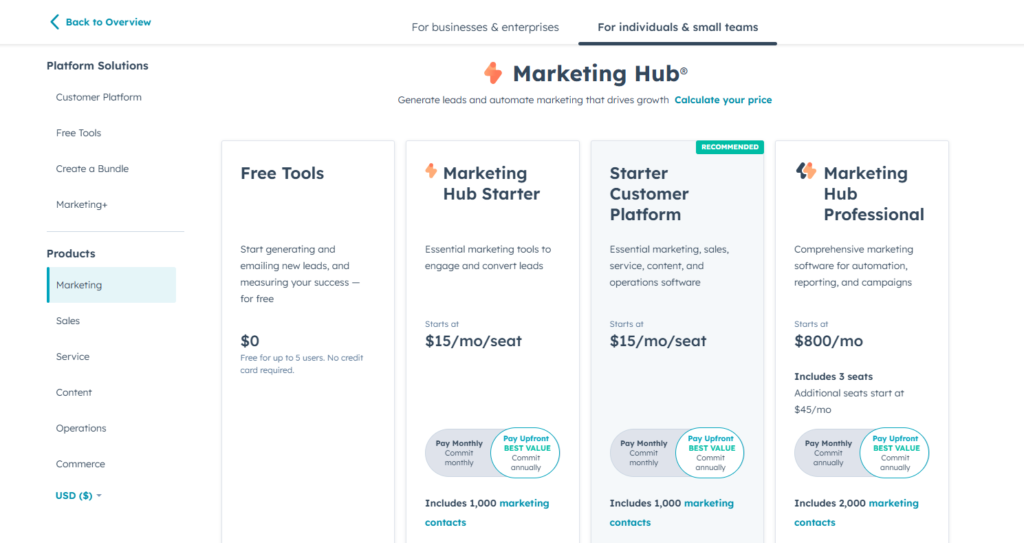
- Free Plan: $0 for core features.
- Starter: $15/month.
- Professional: $800/month.
- Enterprise: $3,600/month.
HubSpot is ideal for small to mid-sized solar businesses that are just starting with CRM tools or those looking for a scalable solution that grows with their needs. Larger companies will find the advanced features of the Professional and Enterprise plans beneficial for more complex operations.
2. Pipedrive CRM
Pipedrive is a sales-focused CRM designed to help teams manage their pipelines and close deals more efficiently. With its simple, intuitive interface, it’s great for solar businesses that rely on strong sales processes to grow their customer base and manage projects.
Key Features:
- Visual Sales Pipeline: Easily track leads and deals through each stage, making it perfect for managing solar installation projects from inquiry to completion.
- Customizable Pipelines: Tailor your sales stages specifically for solar leads, from consultation to proposal, and final installation.
- Lead Management: Centralize all solar client communications, ensuring that no potential lead is missed or delayed.
- Email Integration: Track all communications with potential solar clients from within the CRM to ensure follow-ups.
- Automation Tools: Automate repetitive tasks, such as follow-ups and deal updates, streamlining the solar sales process.
- Reporting: Gain insights into your solar sales performance with customizable reports and analytics.
Pricing:
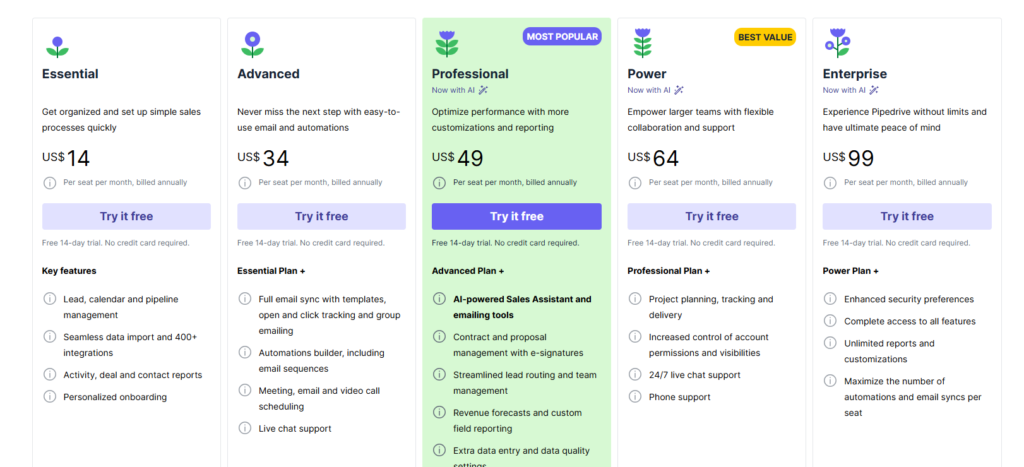
- Essential Plan: $14/month per user.
- Advanced Plan: $34/month per user.
- Professional Plan: $49/month per user.
- Power Plan: $64/month per user.
- Enterprise Plan: $99/month per user.
Pipedrive is best suited for small to mid-sized solar businesses with a strong sales focus. It’s ideal for companies that want to streamline their sales processes, track leads efficiently, and improve conversions with a straightforward, easy-to-use CRM.
3. Keap CRM
Keap (formerly Infusionsoft) is an all-in-one CRM solution aimed at helping small businesses automate marketing, sales, and customer service. With a strong focus on automating processes, it’s ideal for solar businesses that want to streamline lead management and customer follow-ups.
Key Features:
- Automated Lead Capture: Automate lead collection from various channels, ensuring no solar lead is missed and improving response times.
- Email and SMS Marketing: Send automated and personalized follow-up emails and SMS to nurture solar prospects, driving higher engagement and conversions.
- Sales Pipeline Management: Organize and track the sales process, from lead acquisition to solar project closure.
- Appointment Scheduling: Simplify booking meetings with solar prospects and clients, improving overall customer service.
- Payment Processing: Accept payments directly through the CRM for solar installations and services, streamlining billing processes.
- CRM Automation: Automate repetitive tasks like follow-ups, lead assignment, and nurturing, saving time for solar businesses.
Pricing:
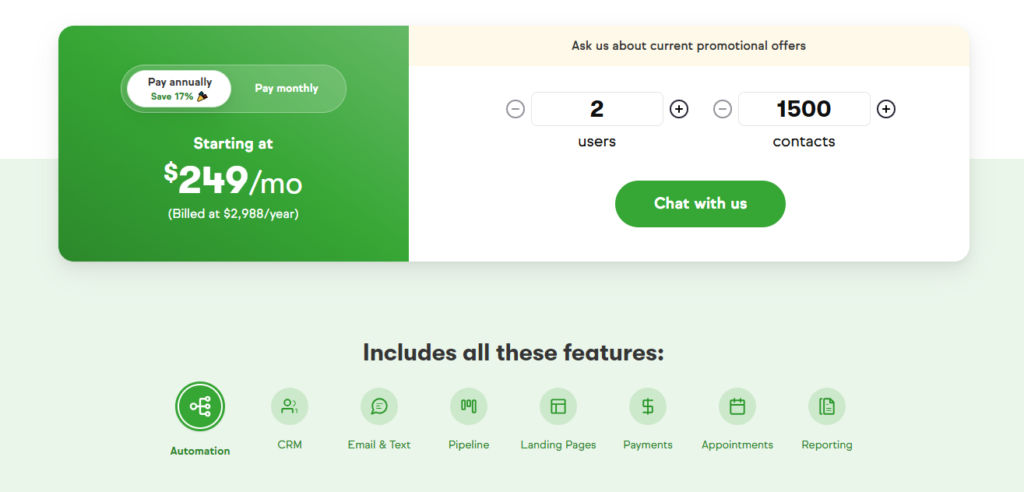
- Keap Pro: $249/month for 1,500 contacts and 2 users. Pricing scales with more contacts and users.
Keap is best for small to medium-sized solar businesses that need to streamline their operations, focusing on automation to reduce manual workload and improve customer engagement. It’s ideal for solar companies that rely on nurturing long sales cycles and building strong customer relationships through automated marketing efforts.
4. Salesforce CRM
Salesforce CRM is one of the most powerful and customizable customer relationship management systems on the market, offering a wide array of tools for businesses of all sizes. Its robust features and extensive third-party integrations make it ideal for solar companies looking for comprehensive sales, marketing, and customer service management.
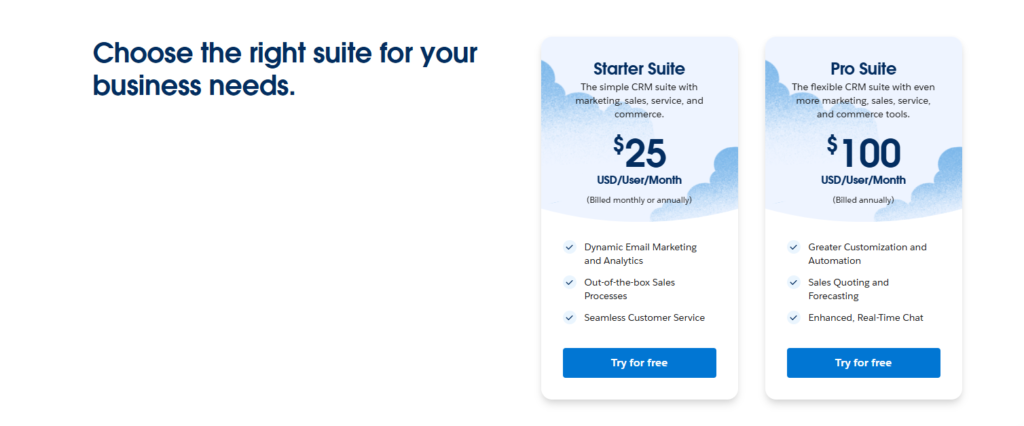
Key Features:
- Customizable Sales Pipelines: Tailor sales stages specifically for solar projects, from lead generation to installation and follow-up services.
- Lead and Opportunity Management: Track solar leads, deals, and opportunities in real time, helping solar businesses close deals faster and manage prospects efficiently.
- Automation & AI Tools: Automate tasks like follow-ups, customer communications, and project management, freeing up time for solar businesses.
- Reports and Dashboards: Create custom reports and dashboards to analyze solar sales performance, marketing campaigns, and operational efficiency.
- Mobile CRM: Access and update solar client information from anywhere, ensuring that on-site solar teams stay connected to office operations.
- App Integrations: Extensive integration with third-party solar design software, financial tools, and marketing platforms to streamline operations.
Salesforce is best suited for larger solar businesses with more complex operations, requiring advanced customization and integrations. It’s ideal for companies with dedicated sales, marketing, and customer service teams, looking to scale and manage multiple solar projects and clients simultaneously.
3. Zoho CRM
Zoho CRM is a flexible and affordable customer relationship management platform designed for businesses of all sizes. Its wide range of features and customization options make it ideal for solar companies looking to streamline lead management, automate processes, and integrate with other tools.
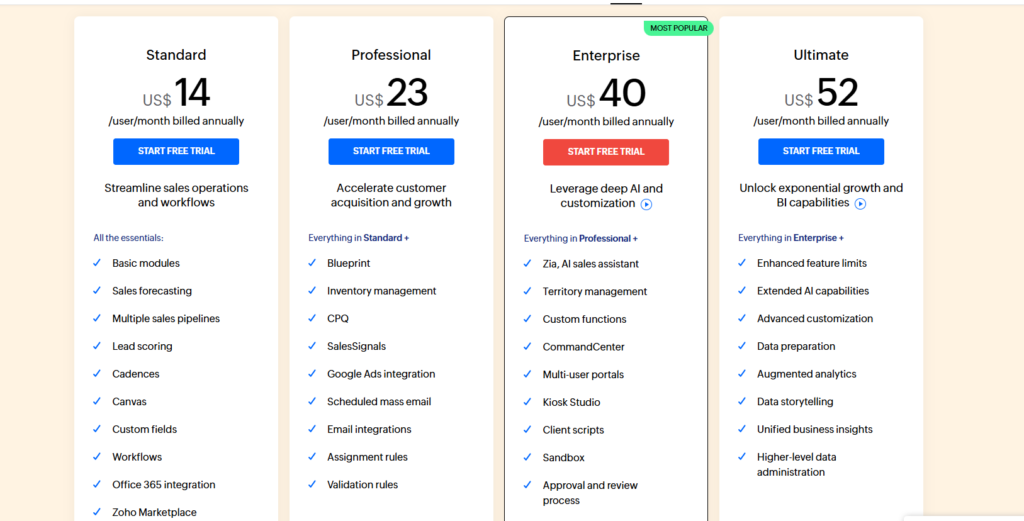
Key Features:
- Lead and Contact Management: Easily capture and track solar leads from multiple sources, helping to nurture relationships throughout the sales cycle.
- Sales Automation: Automate routine tasks like follow-ups, lead scoring, and deal management, freeing up time for solar sales teams.
- Email Marketing: Launch targeted email campaigns to solar prospects, offering personalized solutions and updates.
- Custom Reports & Dashboards: Monitor solar project performance, sales pipeline progress, and team productivity with customizable reports.
- Mobile CRM: Access the CRM on the go, perfect for solar sales teams working in the field.
- Integrations: Integrates with Zoho’s broader suite of products (including project management, finance, and marketing tools), as well as third-party applications, providing an all-in-one solar business management solution.
Zoho CRM is best for small to mid-sized solar businesses that want a cost-effective CRM with strong customization options and integrations. It’s ideal for companies looking to scale operations without a huge investment in software or extensive technical support.
Which CRM is Best for Your Solar Business?
After evaluating the key factors of scalability, ease of use, and customization, Salesforce emerges as the top contender for the best CRM for solar businesses. Its comprehensive feature set, extensive integration options, and robust scalability make it an ideal choice for solar companies looking to optimize their customer relationship management.
However, the best CRM for your solar business ultimately depends on your specific needs and budget. For smaller teams or those seeking a more cost-effective solution, HubSpot CRM or Zoho CRM might be more suitable. On the other hand, if you prioritize a highly visual sales pipeline, Pipedrive could be the perfect fit.
Use Case Recommendations
Different solar businesses have varying requirements based on their size, customer base, and operational complexity. Here are some tailored recommendations:
- Small Solar Startups: HubSpot CRM offers a free tier with essential features, making it ideal for startups looking to manage their customer relationships without significant upfront costs.
- Mid-sized Solar Companies: Zoho CRM provides a balanced mix of affordability and advanced features, suitable for growing businesses that need more customization and automation.
- Large Solar Enterprises: Salesforce is perfect for large enterprises requiring extensive customization, integration capabilities, and scalability to handle complex operations.
Now that you have a clear understanding of the best CRM options for your solar business, it’s time to take actionable steps towards optimizing your customer relationship management. Start by identifying your top CRM choices and explore their features in more detail. Consider starting a free trial or scheduling a demo with the CRM providers to see firsthand how their solutions can benefit your solar business.
How to Choose a CRM: A Beginner’s Buying Guide for Solar Business
Selecting the right CRM for your solar business can seem daunting, especially if you’re new to CRM systems. Here’s a step-by-step guide to help you make an informed decision:
- Identify Your Business Needs
- Assess your current processes and determine what you need a CRM to achieve. Common needs include lead management, sales tracking, customer support, and marketing automation.
- Evaluate Key Features
- Look for essential CRM features such as contact management, pipeline management, reporting and analytics, and integration capabilities with other tools you use.
- Consider Budget Constraints
- Determine how much you’re willing to invest in a CRM. Compare pricing plans and ensure that the CRM offers good value for its cost, considering both current needs and future growth.
- Assess Customization Options
- Ensure the CRM can be tailored to fit your specific workflows and business processes. Customizable dashboards, fields, and modules are crucial for aligning the CRM with your operations.
- Check Integration Capabilities
- A CRM should seamlessly integrate with your existing tools, such as email marketing platforms, accounting software, and project management tools, to ensure smooth data flow and operational efficiency.
- Evaluate Customer Support
- Reliable customer support is vital, especially during the onboarding phase. Look for CRMs that offer comprehensive support options, including live chat, phone support, and extensive knowledge bases.
- Test with a Free Trial
- Take advantage of free trials to test the CRM’s functionality and user interface. This hands-on experience will help you determine if the CRM is a good fit for your team.
- Gather Team Feedback
- Involve your team in the decision-making process and gather their feedback on the CRM’s usability and features. Their input can provide valuable insights into the CRM’s practical benefits.
Conclusion
Selecting the best CRM for your solar business is a critical decision that can significantly impact your growth and customer relationships. By considering factors such as scalability, ease of use, and customization, you can choose a CRM that not only meets your current needs but also supports your long-term business goals. Remember to evaluate multiple options, take advantage of free trials, and involve your team in the decision-making process to ensure you select the perfect CRM for your solar business.
As you move forward, keep in mind the importance of aligning your CRM choice with your business objectives and scalability plans. A well-chosen CRM will streamline your operations, enhance customer satisfaction, and drive your solar business toward sustained success.
Ready to take the next step? Explore and compare the CRM options mentioned in this guide, and start optimizing your customer relationship management today!
FAQs
Do I really need a CRM?
Yes, a CRM system is essential for managing your customer interactions, streamlining your sales process, and improving overall efficiency. It helps you keep track of leads, manage customer data, and enhance communication within your team, leading to increased sales and customer satisfaction.
How secure is my data in a CRM?
Most reputable CRM providers prioritize data security and employ robust measures such as encryption, secure servers, and regular security audits to protect your data. However, it’s crucial to review the security policies of any CRM you consider to ensure they meet your specific security requirements.
Can a CRM integrate with my existing tools?
Yes, many CRM systems offer integration capabilities with a wide range of tools, including email marketing platforms, accounting software, and project management tools. This ensures seamless data flow and enhances the overall efficiency of your business operations.
What is the cost of implementing a CRM system?
The cost of a CRM system varies depending on the provider, the features you need, and the size of your business. Prices can range from free basic plans to several hundred dollars per month for advanced features and larger teams. It’s important to assess your budget and choose a CRM that offers the best value for your investment.
How long does it take to set up a CRM?
The setup time for a CRM can vary based on the complexity of the system and your specific requirements. Basic CRM systems can be set up within a few hours, while more advanced systems with extensive customization may take several weeks. Most CRM providers offer support and resources to help expedite the setup process.
Can a CRM help improve customer retention?
Absolutely. A CRM system enables you to track customer interactions, manage follow-ups, and provide personalized service, all of which contribute to improved customer satisfaction and retention. By understanding your customers’ needs and preferences, you can build stronger, long-lasting relationships.
What features should I prioritize in a CRM for a solar business?
For a solar business, prioritize features such as lead management, project tracking, sales pipeline management, integration with solar design tools, and reporting and analytics. These features help manage the unique aspects of the solar industry, from initial lead generation to project completion and customer follow-up.
Is training required to use a CRM effectively?
While CRM systems are designed to be user-friendly, some training is often beneficial to maximize their effectiveness. Most CRM providers offer training resources, including tutorials, webinars, and support documentation, to help your team get up to speed quickly.
Can a CRM system scale with my business?
Yes, scalability is a key feature of most CRM systems. As your solar business grows, a scalable CRM can accommodate increasing data volumes, additional users, and more complex workflows without compromising performance or requiring a complete system overhaul.
What support options are typically available with a CRM?
CRM providers typically offer a range of support options, including live chat, email support, phone support, and extensive knowledge bases. Some may also provide dedicated account managers, training sessions, and community forums to help you get the most out of your CRM system.
As a seasoned CRM expert with extensive experience in helping businesses optimize their customer relationship management strategies, I am committed to providing insights and guidance to help your solar business thrive. Stay tuned for more updates on the latest CRM trends and best practices.

I’m Rejaul Karim, an SEO and CRM expert with a passion for helping small businesses grow online. I specialize in boosting search engine rankings and streamlining customer relationship management to make your business run smoothly. Whether it's improving your online visibility or finding better ways to connect with your clients, I'm here to provide simple, effective solutions tailored to your needs. Let's take your business to the next level!